This blog is meant to provide a wide variety of children's literature that can be integrated easily into the classroom. The activities provide ways to use these books in the already structured classroom setting. Good books are important for children in all grades. This list includes some of my personal favorites for all different grades!
Showing posts with label Social Studies. Show all posts

Tuesday, September 27, 2011

Chains by Laurie Halse Anderson

Chains 
(Atheneum Books for Young Readers-2008)
By: Laurie Halse Anderson
Grade: 5-7

Chains takes place at the beginning of the Revolutionary War. A thirteen year-old girl names Isabel is promised her freedom by her dying owner. Her owner was very compassionate towards her slaves and taught them to read and write. Miss Mary Finch, their previous owner in Rhode Island, had promised their freedom before she died, but she is instead, since there was no written proof, they were sold to a New York couple with her sister. As a result, her nephew inherited her estate and promptly sold Isabel and Ruth to the Locktons. Isabel and Ruth must do all they can do in order to get freedom, even if one of them spies on their owners for British secrets.This is a great book about determination and what it used to take to become free. The lives of these girls will hopefully make students be thankful for the lives they have.

Theme/Skills Taught: African American history, slavery, bravery, freedom/History of the Revolutionary war

About the Author: Laurie Halse Anderson says that no one who knew her as a child thought she would become a successful adult. She stuttered and needed a reading tutor growing up. In college, she avoided English because she hated the way they made her analyze books. She got her sense of story from eavesdropping on grown-ups telling stories. Initially, she worked as a journalist and completed work-for-hire writing projects to gain experience. But, after having children she grew a new love for literature. When Anderson first started writing for children, she had a day job. “I was sneaking in my writing in the morning and at night. Now that I’m a published author who’s had a lot of lucky breaks, I have a day job—designing my website, answering fan mail, speaking at schools and conferences. So I still sneak in my writing in the morning and at night.”  She feels fortunate to have had such an impact on children. If she had to predict how her life would have turned out, she would never have predicted her current success. For more information on Laurie


Pre-Reading Activities: A great way to introduce this story is to go over the title, "chains". The cover of the book gives some indication that the book is about slavery. Ask students what they already know about slavery? This is a great time to discuss "touchy" subjects to make sure the students know the facts about slavery. This could be used during a history unit to tie in real facts with this story.
Post Reading Activities:  
ELA & Social Studies: During a Revolutionary War unit, have the students create a diary of what goes on in the book, as if they are Isabel, Ruth, or Curzon (another way to summarize). This will be going on while they are reading the book and in each entry students will need to tie in something that accurately occurred in the war.  
Science: Research weather patterns and plant types in the region of New York City. Try to figure out what kind of seeds Isabel might have planted throughout the year to keep her garden going.
Math: Find the number of residents and slaves in New York City in 1776. What percentage of people were slaves? Create a graph to represent this information.

The Island of the Blue Doplins by Scott O'Dell

Island of the Blue Dolphins  
(Houghton Mifflin Books for Children; 10th edition-1960)
By: Scott O'Dell
Grade: 5

Once indians lived on the island, but when they left and sailed east they left one young girl behind.  This story is about an Indian girl names Karana that has to learn how to survive the obstacles that she comes across while on the island. Year after year, she watched one season pass into another and waited for a ship to take her away. But while she waited, she kept herself alive by building a shelter, making weapons, finding food, and fighting her enemies, the wild dogs. It is not only an unusual adventure of survival, but also a tale of natural beauty and personal discovery. It is a great story about making the most of what you have and not giving up. It would have been easy for a young child to be unaware how to survive if they were left alone. It is a good idea to teach students how to take care of themselves if anything may happen to them.


Theme/Skills Taught: Survival/Character Comparisons & Survival Techniques

About the Author: Scott O’Dell’s name was created as a mistake. He was born Odell Gabriel Scott, but while he was working as a newspaper reporter for the Los Angeles Daily News, an editor mistakenly wrote Scott O’Dell as his byline. The name stuck, and O’Dell legally changed it. After his newspaper days, he began writing books for adults. Beginning in the late 1950s, however, his focus shifted, and he started writing for young adults. He wrote over twenty-six young adult novels, three books for adults, and four nonfiction books. His most famous work is Island of the Blue Dolphins, which won the 1961 Newbery Medal, among other awards. More information about Scott
Pre-Reading Activities: Have students try to identify the components of courage. You might start them off by listing "resolve" and "inner strength." Ask students to help define these terms and to name other aspects of courage. Then challenge them to find examples to share with the class. They might find poems or short stories in which characters show inner strength, newspaper articles that describe people who have shown resolve, and so on. As students read, they can think about how Karana shows courage.

Post Reading Activities: Have the students create a relief map of the community (without businesses and restaurants) and have them put the ways they would be able to survive off the land on the map, like Karana was able to survive on the island. Then, the students will need to write how they were survive on the land and compare it to Karana's experience.

Sunday, September 25, 2011

Jamela's Dress by Niki Daly

Jamela's Dress 
(Farrar, Straus and Giroux-2004)
By: Niki Daly
Grade: K-2

Jamela's Dress is the first of a series of picture books about a young African girl, Jamela. In this story, Jamela volunteers to watch her mother's dress material dry, but instead lets her imagination take over. She took the material, wrapped it around her like a dress and went to town singing "Kwela, Jamela African Queen". The material got so ruined and her mother was not very happy. But this story does have a happy ending. I loved how Jamela wasn't afraid to use her imagination, I just wouldn't want my students thinking it was okay to be that irresponsible.

Theme/Skills Taught: Imagination & Adventure/Foreshadowing, geography & problem solving

About the Author: Niki Daly is a South African author-illustrator whose picture books celebrate the imaginative powers of children and their magnificent everyday lives. He is able to view the world from a child's perspective, mostly reflective of multicultural modern South Africa. Indeed, many of Daly's solo efforts, as well as his illustrations for other authors, represent strongly African themes. Daly first became involved in drawing by using pencil stubs handed down from an uncle who painted watercolor pictures. Born in South Africa, Daly traveled to London at the age of twenty-four in order to pursue a career in singing and songwriting. However, economic difficulties ended his music career after two years, and Daly found work as a commercial artist, which eventually led to illustration for children's books. Daly's themes and motifs continue to surprise. His picture books range from the sublime to the silly, and in between they subtly challenge social prejudices without being didactic. Niki Daly's Bio

Pre-Reading Activities: As you are reading, teach foreshadowing skills. This is done by pausing as you read to ask questions such as: What do you think is going to happen when she goes to town? How do you think her mother will react? This teaches kids to use what they already know to predict the next scene.

Post Reading Activities: The story has a happy ending. What if the photographer did not get paid for the picture and Jamela wasn't able to buy more fabric? Discussing this with the students may help with their problem solving skills. Describe a time when you "messed up" and what did you do to fix the problem? This can be done aloud or in a notebook.
-You could tie this into a Social Studies lesson to show them where South Africa is and "research" location, dress, foods, etc.

Thursday, September 22, 2011

Listen to the Wind: The Story of Dr. Greg and Three Cups of Tea by Greg Mortenson & Susan L. Roth

Listen to the Wind: The Story of Dr. Greg and Three Cups of Tea
(Dial-2009)
By: Greg Mortenson & Susan L. Roth
Collages by: Susan L. Roth
Grade: 2-4

Listen to the Wind: The Story of Dr. Greg and Three Cups of Tea is a wonderful true story about the children of Korphe. Greg Mortenson is a real person who helped change the lives of these children forever. The children of Korphe didn't have a school until Dr. Greg Mortenson came to their village and returned later to help the villagers build their own school. Dr. Greg has now built over 130 schools in rural regions of Pakistan and Afghanistan. He is a true example of a global citizen, someone who believes education is right for all children. This is a truly inspirational story and can help to promote cultural awareness and appreciation for the things we take for granted, like school. Although some of the events told in the story may not be true, it is a great story and displays great moral values.

Theme/Skills Taught: Helping others/Teamwork & Appreciation (social skills)

About the Author: After High School, Mortenson joined the US Army as a medic and attended college with a football scholarship. He traveled to Pakistan in order to climb the world's second highest mountain, K2 , took a wrong turn and ended up in the village of Korphe. He was exhausted after the hiking (and rescue of the fifth climber) and they cared for him. After noticing the children attending school outside, he took it as his mission to build them a school. His story is amazing and those children were lucky this man was the man that "stumbled" upon their village. About Greg Mortenson
About the Artist: Susan L. Roth does not pain, she collages. The illustrations in this book are very unique and very captivating. She only cuts or rips. She refusing to use pens, pencils or oils. She is very talented and unique in her style. She agrees that the process can be a mess, but she hardly ever throws away the "scraps". She finds ways to use them in her next works. About Susan L. Roth
Pre-Reading Activities: Show the students a map of where this book takes place. Heroes come from ordinary people who want to make a difference. Talk about heroes you know. Talk about other countries and how some countries don't have school buildings and they learn outside. Discuss "free education" with your students. Most children don't know how lucky they are to be able to go to school for free. Explain that in other countries, children only dream about going to a real school.

Post Reading Activities:
-Make a list of things you need to start a school
-Write a letter to Dr. Greg explaining what you think about what he did
-Use glossary in the back of the book to discuss new vocabulary
-Explain the importance of helping other countries and people. This is a great multicultural book to discuss language barriers and the differences between different cultures.

Monday, September 12, 2011

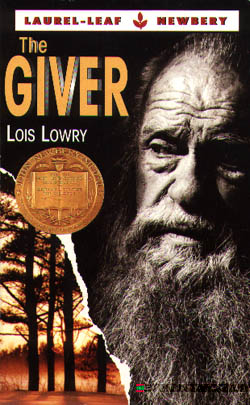
The Giver by Lois Lowry

The Giver
(Houghton Mifflin Harcourt-1993)
By: Lois Lowry
Grade: 6-8
*Newbery Medal 1994*

The Giver is about a young boy names Jonas. His world is essentially perfect. Everything in his world is controlled. There are no choices. When an individual turns twelve, they are assigned a role in society (their job). When Jonas turns twelve, he is assigned to receive training from The Giver. The Giver is the only one who holds the memories of true pain and true pleasure. Once he begins training, he will receive all of this information, along with a lot of truth that he didn't know existed and that he must never talk about. What will Jonas do with the new information? I love this book! I have read it in middle school and high school for different classes. The Gossamer is also a great book written by Lois Lowry. I recommend both books for middle school students. They will be able to relate and there is a lot of information that will promote discussion and debate.

Theme/Skills Taught: Utopia Society, rules & values, family/

About the Author: Lois was born the middle child. She was very solitary and lived in the world of books and her imagination. She lived all over the world because her father was a career military officer. She was born in Hawaii, moved to New York, then Carlisle Pennsylvania, to Tokyo, back to New York for high school and to college at Brown University in Rhode Island while her family was living in Washington, D.C. She married at 19 to a Naval officer which continued her travels.  Her five children grew up in Maine where she returned to college (University of Southern Maine), got her degree and went to grad school and began writing professionally. Her books have varied in content and style. Yet it seems that all of them deal, essentially, with the same general theme: the importance of human connections.Lois Lowry's Bio

Pre-Reading Activities: Make a survey/list of ideas or activities. Have students agree/disagree whether they would make a perfect society. Have them add 5 of their own. For example "no murder". Most students would agree that having no murder in a society would make it closer to perfect. Music, for example, may present more differences amongst students. Make sure you include ideas and themes from the story.

Post Reading Activities: Each chapter presents new information for class activities and discussions.
-There is a lot of new vocabulary (and they refer to things differently than we do). Have students use context clues in the first four chapters to define the following: Nurturer, Nurturing Center, Naming, Elder, Receiver, Assignment, Comfort Object, Newchild, Bike Port, Speaker, Rehabilitation Center, House of the Old, Volunteer Hours, Birthmother, and Celebration of Release.
-Create a perfect society. Describe: Your system of laws, rules, and punishments; Your system of how people are educated; Your system for finding and choosing leaders, and how the government runs;Your social system & how people raise families, and find enjoyment. Feel free to add any other plans you can think of.
-In The Giver, they have a specific life schedule (each individual does the same thing at the same age). For example, children get their assignments when they turn twelve. Have students brainstorm and write down what happens at ages 1-12 and what happens after they receive their assignments.

Silly Street by Jeff Foxworthy

Silly Street
(Harper Collins-2009)
By: Jeff Foxworthy
Illustrated by: Steve Bjorkman
Grade: 3-4

Silly Street is a fantastic, humorous story that is presented as a poem about a community. It is wonderful to get the kids thinking about all of the places that make up communities, and Silly Street is the perfect book to introduce during ELA or Social Studies. This book is very simple and "silly" so it catches students' interests. Kids will love to read the poems and look at the illustrations. Some may wish they lived on Silly Street.

Theme/Skills Taught: Community/Fluency

About the Author: Jeff Foxworthy is a comedian and an author, born in Atlanta, Georgia. Foxworthy, with roots deep in the South, counts himself as a typical "redneck." Riding the popularity of the country music wave during the 1990s, Foxworthy has parlayed his southern brand of humor into his own huge popularity. With a television situation comedy, several sound recordings, and many books, Foxworthy has become virtually a household word. Foxworthy planned to follow in his father's footsteps by majoring in computer technology at Georgia Tech and working at IBM. Yet he discovered that he gained more enjoyment from making co-workers laugh than working with computers. He eventually quit his job to devote his life to being a comedian. He became famous as an opening act for country music superstars Garth Brooks and Emmylou Harris. Each of his books sold over a million copies. His first recording, You Might Be a Redneck If..., went double platinum, breaking Eddie Murphy's previous record for a comedy recording made in the 1980s. In 1995, Foxworthy starred in the situation comedy The Jeff Foxworthy Show, roughly based on his comedy routines. In 1996, NBC picked up the series, which had lagged on ABC. Jeff Foxworthy's Bio Jeff is hilarious and also is the host of "Are You Smarter Than a Fifth Grader?" where he includes some of his humor!
About the Illustrator: The first of four children, Steve has been drawing, painting and spilling ink on shirts, carpets and chairs ever since. Although he had originally planned to be a high school English teacher, he took a detour and has been an illustrator for over twenty five years now. Besides the advertising, editorial illustration, and over seventy children's books to date, he creates greeting cards with his brother Carl. Over the years more than 100 million of our cards have been sold through Recycled Paper Greetings. While the illustration keeps him busy, the English teacher part of him still creeps out. He enjoys doing school visits and occasional teaching, using my drawing as he speaks, for churches and youth camps. He lives with his wife in Irvine, California, and has three children, a dog, cat and a desert tortoise who is always looking for a way to sneak out of the yard. Steve Bjorkman's Bio

Pre-Reading Activities: What makes up a community? Jot down a word web on the board to show all the places and people who are involved in a community.

Post Reading Activities:  
Drawing-Make a map and include all the shops/stores on Silly Street.This will test their comprehension and "searching for answers in text" skills.
Writing-Make up a place (store, bank, etc.) and create a poem to go along with it. Students can use these poems as an example but also introduce them to different types of poems.

Wednesday, September 7, 2011

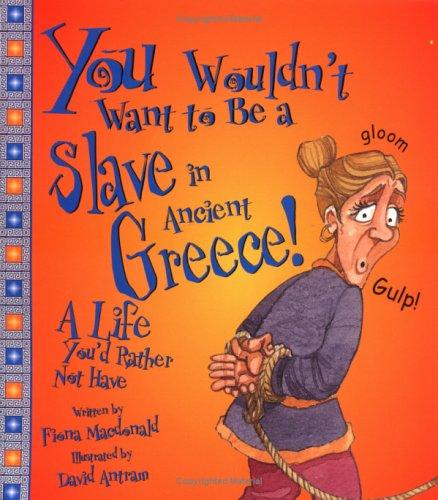
You Wouldn't Want to Be a Slave in Ancient Greece! by Fiona Macdonald

 You Wouldn't Want to Be a Slave in Ancient Greece!
(Hodder Wayland Childrens-2001)
Written By: Fiona MacDonald
Illustrated By: David Antram
Grade: 5-6

You Wouldn't Want to Be a Slave in Ancient Greece! is an informational text about the life of a slave in Ancient Greece and the troubles they face. These troubles include parting from your family, serving others, no free time, punishments, chores, fetching and carrying, working the farm, and much more! This book is a great compliment to a lesson on Ancient Greece. The pictures are really funny and are very appealing to children.

Theme/Skill Taught: Hardships & Struggle/Comparing & Contrasting

About the Author: After a degree and research into medieval social history, Fiona became a university tutor and  freelance writer.  About 10 years ago, she gave up teaching and  returned to ancestral Scotland, where she lives in a remote village beside the sea. She has written around 300 books for children or adult new readers.  Most are about ancient or medieval history,  social history, or non-European civilizations.
Awards:


*1996 Times Educational Supplement: 'Children's Information Book of the Year'.  Later shortlisted for similar awards in  Europe and Asia-Pacific region.

*1998 Public Library Association/American Library Association: 'Top Ten Titles for Adult New Readers', series recommended

 *2005 American Association of School Librarians: ‘boys succeed@your library’ program, 2 titles selected

 in past 10 years, several  books listed in UK as ‘Children’s Books of the Year’,  and similar selections in Europe and East Asia.

Pre-Reading Activities: What would it be like to be a slave? What was Ancient Greece like during this time? Review the vocabulary in the Glossary before reading to avoid any further confusion.

Post Reading Activities: Do a compare and contrast (chart or essay) on the book and what we have been learning in class. Does the book give a true depiction of what life was really like?

What a Family! by Rachel Isadora

What a Family! 
(Putnam Juvenile-2006)
Written and Illustrated by: Rachel Isadora
Grade: 1st

What a Family! is based on a child named Ollie and how he became the individual he is. This is a beginners look at family trees. It is a great way to "celebrate" being different and appreciating where certain traits and characteristics came from.

Theme: Family

About the Author:Rachel Isadora wanted to be a ballerina when she grew up (and became one). Her second career is an artist and author. Her first very successful picture book was Ben's Trumpet, but it didn't stop there. Rachel was born and raised in New York City studying at the School of American Ballet. She danced until a foot injury made her focus on a second career: book illustration. Rachel is a very talented woman who imagines a story through pictures, then begins writing. In New York City, Rachel lives with her two children. Rachel Isadora Bio

Pre-Reading Activities: What is a family? All students will have a different definition. We will brainstorm in the board what makes up a family (because everyone's family is different).

Post Reading Activities: Students will create a list of their traits/characteristics (hair color, eye color, tongue rolling, etc.) and bring it home to determine which traits and characteristics are similar to their family members. It is a great introduction to family and diversity.