This blog is meant to provide a wide variety of children's literature that can be integrated easily into the classroom. The activities provide ways to use these books in the already structured classroom setting. Good books are important for children in all grades. This list includes some of my personal favorites for all different grades!
Showing posts with label Science. Show all posts

Tuesday, September 27, 2011

Chains by Laurie Halse Anderson

Chains 
(Atheneum Books for Young Readers-2008)
By: Laurie Halse Anderson
Grade: 5-7

Chains takes place at the beginning of the Revolutionary War. A thirteen year-old girl names Isabel is promised her freedom by her dying owner. Her owner was very compassionate towards her slaves and taught them to read and write. Miss Mary Finch, their previous owner in Rhode Island, had promised their freedom before she died, but she is instead, since there was no written proof, they were sold to a New York couple with her sister. As a result, her nephew inherited her estate and promptly sold Isabel and Ruth to the Locktons. Isabel and Ruth must do all they can do in order to get freedom, even if one of them spies on their owners for British secrets.This is a great book about determination and what it used to take to become free. The lives of these girls will hopefully make students be thankful for the lives they have.

Theme/Skills Taught: African American history, slavery, bravery, freedom/History of the Revolutionary war

About the Author: Laurie Halse Anderson says that no one who knew her as a child thought she would become a successful adult. She stuttered and needed a reading tutor growing up. In college, she avoided English because she hated the way they made her analyze books. She got her sense of story from eavesdropping on grown-ups telling stories. Initially, she worked as a journalist and completed work-for-hire writing projects to gain experience. But, after having children she grew a new love for literature. When Anderson first started writing for children, she had a day job. “I was sneaking in my writing in the morning and at night. Now that I’m a published author who’s had a lot of lucky breaks, I have a day job—designing my website, answering fan mail, speaking at schools and conferences. So I still sneak in my writing in the morning and at night.”  She feels fortunate to have had such an impact on children. If she had to predict how her life would have turned out, she would never have predicted her current success. For more information on Laurie


Pre-Reading Activities: A great way to introduce this story is to go over the title, "chains". The cover of the book gives some indication that the book is about slavery. Ask students what they already know about slavery? This is a great time to discuss "touchy" subjects to make sure the students know the facts about slavery. This could be used during a history unit to tie in real facts with this story.
Post Reading Activities:  
ELA & Social Studies: During a Revolutionary War unit, have the students create a diary of what goes on in the book, as if they are Isabel, Ruth, or Curzon (another way to summarize). This will be going on while they are reading the book and in each entry students will need to tie in something that accurately occurred in the war.  
Science: Research weather patterns and plant types in the region of New York City. Try to figure out what kind of seeds Isabel might have planted throughout the year to keep her garden going.
Math: Find the number of residents and slaves in New York City in 1776. What percentage of people were slaves? Create a graph to represent this information.

Thursday, September 22, 2011

Forest Night Forest Bright by Jennifer Ward

Forest Night Forest Bright
(Dawn Pubns-2005)
By: Jennifer Ward
Illustrated by: Jamichael Henterly
Grade: 2-4
*2009 Giverny Award Winner*

Forest Night Forest Bright is about the different animals who are awake during the day (the first half of the book) and awake at night (the second half of the book). It is written so creatively because you can FLIP THIS BOOK and read about the daytime in the forest then the nighttime. I loved the use of poetry, especially to teach some more higher level vocabulary for elementary students and who doesn't love a rhyme? It is informational as well as interesting.

Theme/Skill Taught: Forest life/Nocturnal vs. Diurnal

About the Author: Jennifer Ward began writing as a child. She spent a lot of time outdoors exploring in nature and wrote stories about what she saw. She wrote for herself and her parents. Growing up, she continued to be amazed by nature and became a teacher. Eventually she decided to write full time for children and is currently the author of several popular children's books. Jennifer Ward's Bio


About the Illustrator: Jamichael Henterly never set out to be a book illustrator. He was in the Army, an infantry medic, a firefighter and a Forest Service fire lookout. His dream was to become a scientist, but loved to draw. He says he stumbled upon the opportunity to illustrate and took it. In order to be a great artist, he researches a lot because he wants to capture the true beauty of nature, which he does in this book. About Jamichael Henterly


Pre-Reading activities: Discuss different forest animals. Are they all awake during the day? What are different ways animals move and act. Have them give a few examples. Then you can show how use of descriptive words really changes the picture you make in your head as you read.

Post Reading Activities: Using the book (or research), students can create a chart showing the nocturnal animals vs. diurnal. This will introduce them to new vocabulary terms as well as get them familiar with different life styles of different animals who live in the same habitat. Also a fun activity would be to draw the animal next to the descriptive word that describes their behavior. For example, take "Strut and wobble...turkeys gobble", draw a turkey and write strut or wobble and have them define it. This will broaden their vocabulary as well.

Monday, September 12, 2011

A Tree for Emmy by Mary Ann Rodman

A Tree for Emmy
(Peachtree Publishers-2009)
By: Mary Ann Rodman
Illustrated by: Tatjana Mai-Wyss
Grade: 1-2
*Giverny Award Winner 2011*

A Tree for Emmy is about a young girl, Emmy, who loved all trees but especially the mimosa tree in her Gramma's pasture. She loved it so much that she wanted it for her birthday, but stores didn't sell them. She went to visit her Gramma's tree and found a baby mimosa growing right next to it. This is a great story about the innocence of a child and the joy a tree can bring them.

Theme/Skill Taught: Perseverance/Life of a tree


About the Author: She was born in Washington, DC in 1954 and grew up living in Chicago and Jackson, Missisippi. She received a BA in theater arts from Lenoir-Rhyne College in Hickory, NC, a master's degree in library and information science from the University of Tennessee-Knoxville, and an MFA in writing for children from Vermont College. She has held a variety of jobs ranging from community theater director to church youth coordinator but has been primarily a children's librarian. She received a number of awards for her books including the Georgia Book of Excellence Award, special recognition in Kentucky, Rhode Island, Kansas and Nebraska, the Mark Twain Award in Missouri. the Chicago Public Library's "Best of the Best" list and was named a Notable Book by the american Library Association.Mary Ann Rodman's Bio

About the Illustrator: Tatjana Mai-Wyss was born in Switzerland. Growing up with her nose in a book, she always wanted to be the one to draw the pictures. Today Tatjana lives in sunny South Carolina where she can work out on the screen porch year round and listen to the birds. Most often she uses watercolor and gouache, adding detail and texture with collage and colored pencils. Her black and white work is usually done the old fashioned way, in India ink with a dip pen. Lately she has had a good time experimenting with paper cuts.Tatjana Mai-Wyss' Bio


Pre-Reading Activities:  Can discuss with the kids about different family members and what they like about going to different houses (food they cook, toys they can play with). This would be a great journal entry or discussion before the book.
Post Reading Activities: I would read this book during science lessons and learning about seed and how seeds can be planted and grow into a tree. After reading the book, we can plant a seed, water it and watch it grow.

The Prince of Butterflies by Bruce Coville

The Prince of Butterflies
(Sandpiper-2007)
By: Bruce Coville
Illustrated by: John Clapp
Grade: 1-3
*Giverny Award Winner 2008*

The Prince of Butterflies is about a young boy named John who "befriends" a large group of monarch butterflies. They seem to have lost their way on their path home and they need John's help to find their way again. He tried envisioning green meadows and when he imagined the right one they fluttered with excitement, but he didn't know how to get there. The butterflies helped him to fly through the air to the butterflies' path. Once he got there he was panicked that he wouldn't be able to make it home. He did make it home, but the butterflies would need his help twice more in the coming springs and he would always lead them to safety. I won't ruin the ending but it is such a touching story! I loved reading it and I think students would love it too because the boy is able to fly (and how many students have probably wanted to fly at some point in their lives?).

Theme/Skills Taught: New Paths in life/science lessons about butterflies (Monarchs)
About the Author: Bruce was born in Syracuse, New York, on May 16, 1950. Except for one year that he spent at Duke University in North Carolina, he lived in and around central New York until September of 1990, when he moved to New York City, where he lived for two years. Now he is back in Syracuse. The first time he can remember thinking that he would like to be a writer came in sixth grade, when his teacher, Mrs. Crandall, gave them an extended period of time to write a long story. He loved doing it. He started working seriously at becoming a writer when he was seventeen. He was not able to sell right away and had other jobs that included toymaker, gravedigger and salesman. Eventually he became an elementary teacher. He got married at nineteen to an artist and began trying to create books together. They did two books together! From the timehe was young, he had a dream of becoming a writer. Now that dream has come true, and he is able to make my living doing something that he really loves. Bruce Coville's Bio

About the Illustrator: John Clapp was born and raised in the San Francisco Bay Area. Originally, what sparked his interest in art was comic strips, comic books, and cartooning in general. Just prior to college he "discovered" the field of illustration, and ended up majoring in illustration at Art Center College of Design in Pasadena. Several years later, he received a Master's Degree in Illustration from Syracuse University. After getting his Bachelors Degree, he moved back to the Bay Area, and started freelancing as an illustrator, working for every conceivable type of client. Eventually, he began to find most of his work in the publishing world; first doing book jackets, and eventually, writing and illustrating children's books, which is what he still does to this day. Four months after graduating from Art Center, he was hired to teach Figure Drawing and Perspective at The Academy of Art in San Francisco. A year later, he was hired at San Jose State University to teach in their illustration department (now the Animation/Illustration Department) and I've been teaching there ever since. To date, he's published five books for children. John Clapp's Bio
Pre-Reading Activities: Show stages of a butterflies life. This will be after you review the stages of a butterfly.This can be done before or after a lesson on the life-cycle of a butterfly. Have students create a power point with pictures of each of the stages.


Post Reading Activities: This book can be in introduction into the monarch migration (Science) or an introduction/recap of the life-cycle of a butterfly.

Thursday, September 8, 2011

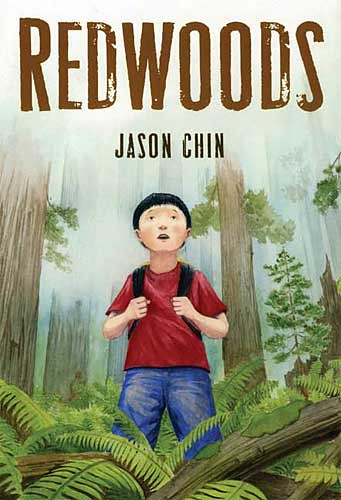
Redwoods by Jason Chin

Redwoods
(Flashpoint-2009)
By: Jason Chin
Grade: 3-4
Genre: Blend of Fiction and Non-Fiction
*2010 Giverny Award Winner*

Redwoods is about a young boy who finds a Redwoods book at the subway station. He begins reading about the history of Redwoods and when he emerges from the subway, he finds himself in a forest surrounded by very, very tall Redwoods. This book is so informational and clearly meticulously researched. It has a lot of neat facts for younger children, and unlike a textbook, the pictures make the words come to life. Instead of reading facts, students feel like they are in the forest with the boy. I love how the story moves through the forest and how it teaches important information about redwoods. I really like how the story ends and leaves the next step in the journey up to students to create. 

Theme/Skills Taught: Environment & Imagination/Predicting & Using context clues

About the Author: Jason Chin is an author and artist living in Brooklyn whose work includes the illustrations for Simon Winchester's The Day the World Exploded. REDWOODS is the first book he has written and illustrated for Roaring Brook Press. He was trained in illustration at Syracuse University and began his children's illustration career while working at Books of Wonder in New York City. His other books include: The Master Spy Handbook, The Master Detective Handbook, Chinese New Year & The Silver Sorceress of OZ. Jason Chin's Bio

Pre-Reading Activities:What do you know about Redwoods? Think-pair-share. Have you ever seen a redwood tree? Where would you find one?

Post Reading Activities: This book could be linked to a life cycle lesson. The book teaches about competing for resources and how the redwoods survive and defend themselves. Students can create a life cycle that includes redwoods, explain the life cycle, or draw a life cycle. There are many different options to display the same information. Give the students options. This book can also be tied in with a lesson on the rainforest since redwoods are found in the rain forest.
-What book would you want to live in? and what? (good post reading journal entry idea)
-Research one of the animals that are named in the book ( squirrels, beetles, earthworms, centipedes, spiders, salamanders, banana slugs, bald eagles, ospreys, woodpeckers, and northern spotted owl)
-Write the next "chapter". The young girl picked up his book, so what do you think will happen next?

*Ticket out the door: Write one new fact you learned about Redwoods. 

Wednesday, September 7, 2011

The Snail and the Whale by Julia Donaldson

The Snail and the Whale
(Puffin-2006)
By: Julia Donaldson
Pictures by: Axel Scheffler
Grade:1-2
*2007 Giverny Award Winner*

The Snail and the Whale is about a snail and a whale who travel together. The snail hitches a ride on the tail of the whale and they travel the ocean together. The climax in the story is when the whale gets upset by the noises of the people playing in the ocean and swims too close to shore. The tide is slipping away and the whale is stuck because he is too big. The snail, worried about his friend, goes in to a classroom and writes "save the whale" on the chalkboard. The townspeople come to water the whale and he is saved. The whale and the snail go back swim back to the dock to share their story and all the snails want a ride on the whale's tail.  It is a wonderful story about friendship and adventure and how you should never give up. I loved this story for younger students.

Theme/Skills Taught: Adventure & Friendship/Working as a team & Sequencing

About the Author: Julia grew up with her sister Mary and the two of them were always creating imaginary characters and mimicking real ones. Julia and her husband (prior to being married) would go to busking together, creating songs for different countries, which began a career in singing and songwriting for children's television. She has made 2 cd's of her music. One of her television songs was written into a book in 1993 and she loved having the book to hold. Since then, she had published 20 plays. Since then, she has written many books and loves to have children sing and help act out the stories. She is a true inspiration. Julia Donaldson's Bio
Pre-Reading Activities: Show them the cover of the book and have them predict what will happen in the story. Also brainstorm what they already know about snails and whales. Attempt to tie the story in to a science lesson about lifecycle or animals in the ocean. 

Post Reading Activities: Give the students a piece of paper split into 4 sections and have them pick the 4 most important events in the story (with pictures). Each student may have a slightly different response, but as long as the 4 events are sequenced correctly, they will receive credit.